You can still get pregnant while taking the pill, especially if you miss pills, take them late, have vomiting or diarrhoea, or take certain other medicines at the same time. If you think you might be pregnant, take a pregnancy test first, stop the pill only if the result is positive, and then see a doctor to confirm how far along the pregnancy is and where it is located. Knowing this helps you plan your options in time under the law.
Why You Can Get Pregnant on the Pill: How the Pill Fails
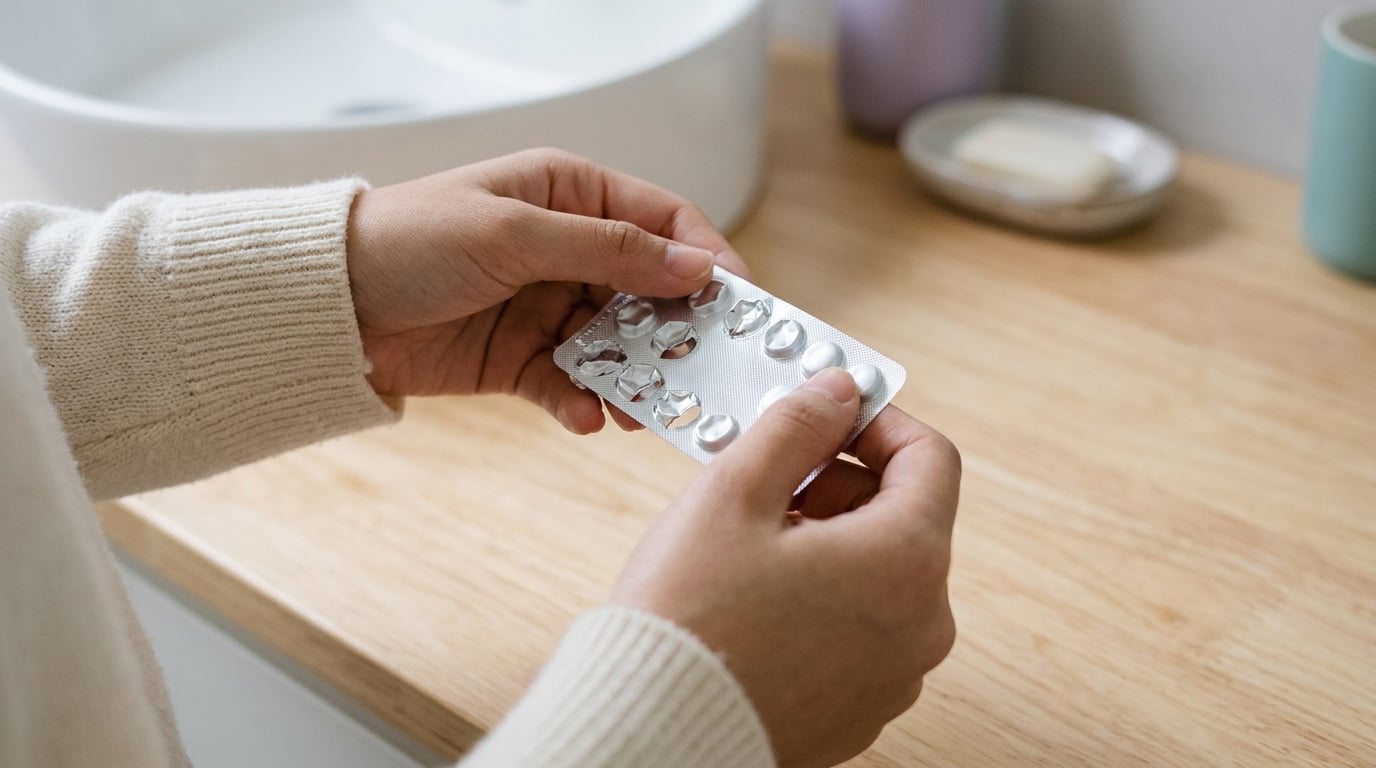
The contraceptive pill works well when it is taken consistently, but in real life its effectiveness can drop for several reasons. Getting pregnant while on the pill is not unusual, and it does not mean you have done something seriously wrong. The most common causes are:
- Missing pills or taking them late is the most common cause, especially at the start of a pack or right after the pill-free break.
- Starting a new pack late – a pill-free break that goes on too long can allow your body to start ovulating again.
- Severe vomiting or diarrhoea after taking a pill can mean your body does not fully absorb the hormones.
- Taking certain medicines or herbal products at the same time, such as some anti-seizure medicines, some tuberculosis medicines and St John's wort, which can lower the hormone levels from the pill.
- Progestogen-only pills need to be taken at a more exact time than combined pills; taking one even slightly late can reduce how well it works.
If any of the above happens and you have sex without a backup method of contraception, the chance of pregnancy goes up. If you are not sure what to do with the rest of your pack, read the leaflet that comes with the pill or ask a pharmacist.
Does the Pill You Took Before Knowing You Were Pregnant Affect the Baby?

The most common worry after finding out you became pregnant while on the pill is that the pills you took will cause a birth defect. Overall, the evidence from studies has not found that taking the contraceptive pill before you know you are pregnant increases the risk of birth defects. This applies to both combined pills and progestogen-only pills.
This information matters whichever way you decide. If you are still considering whether to continue the pregnancy, worry about the pills you have already taken should not be the main reason you feel you have to rush a decision. Your decision should be based on your own life circumstances, health and readiness.
That said, every pregnancy has its own individual factors, such as existing health conditions, other medicines you take or your medical history. Tell your doctor which pill you were taking and until when, as well as any other medicines and herbal products you use. Giving a complete history helps the doctor plan your care safely.
Should You Stop the Pill Straight Away? Test First, Then Decide
The first step when you think you might be pregnant is a urine pregnancy test, which you can buy at a pharmacy, or a test at a health facility. The result tells you what to do next.
- If the result is positive, stop taking the pill, because there is no benefit in continuing once you are pregnant. Then make an appointment with a doctor to confirm the result.
- If the result is negative, you do not need to stop the pill yet. Keep taking it as usual and repeat the test as advised in the test leaflet or by your doctor, because if you test too early, the pregnancy hormone may not yet be high enough for the test to pick up.
Stopping the pill before you know your result can genuinely increase your risk of pregnancy if the test turns out to be negative, so always test first.
It is also worth knowing that some people on the pill have very light bleeding, or none at all, during the pill-free break. A missed period while on the pill does not always mean you are pregnant. But if you have other symptoms as well, such as nausea, tender breasts, unusual tiredness, or you have missed pills, a pregnancy test is the clearest way to find out.
See a Doctor to Confirm How Far Along You Are and Where the Pregnancy Is
Once your test is positive, see a doctor as soon as you can. The doctor will confirm two important things that affect every option that follows.
- How far along the pregnancy is – people on the pill often find it hard to date a pregnancy from their cycle, because the bleeding during the pill-free break is not a natural period. Doctors therefore often use an ultrasound to help assess it. Knowing the gestational age clearly is very important, because Thai law sets the conditions for ending a pregnancy according to gestational age.
- Where the pregnancy is – the doctor will check whether the pregnancy is inside the uterus, because an ectopic pregnancy (outside the uterus) is a condition that needs medical care and cannot continue normally.
Bring information to your appointment, such as the name of your pill, the date you started your most recent pack, any times you missed pills or were ill, and the date of your last bleed. This helps the doctor assess your situation more accurately. If you do not yet know where to go, you can call the Department of Health hotline on 1663 or look up the RSA network at rsathai.org.
While you are waiting to see a doctor, if you have any of the following symptoms, do not wait for your appointment – go to hospital straight away.
Symptoms that need a hospital immediately
If you experience any of the symptoms below, go to the nearest emergency room or call 1669 immediately.
- Bleeding heavy enough to soak through several thick pads one after another — call 1669
- Severe abdominal pain that does not ease, or pain spreading to the shoulder — call 1669
- Fever with chills, especially alongside foul-smelling discharge — call 1669
- Dizziness, fainting, or feeling like you might pass out — call 1669
- Vomiting that keeps on so you cannot keep fluids or food down — call 1669
One-sided abdominal pain that does not ease or keeps getting worse should be seen by a doctor the same day, because it can be a sign of an ectopic pregnancy.
Getting treated comes first: the care is the same as the care for a miscarriage, and you do not have to explain how the pregnancy ended in order to be treated.
Foul-smelling discharge without a fever does not need an ambulance, but it should be seen by a doctor the same day rather than left overnight.
For general, non-urgent questions about abortion services or where to find care, you can call 1663, the Department of Health counselling hotline, at no charge.
Your Three Options When You Are Pregnant on the Pill
Once a doctor has confirmed that the pregnancy is inside the uterus, you have three main options. No option is right or wrong for everyone; the decision depends on your health, your life circumstances and your readiness.
- Continue the pregnancy and raise the child yourself – start antenatal care to look after your health and the baby's.
- Continue the pregnancy and place the child for adoption – you can get counselling about adoption from a social worker.
- End the pregnancy – this is legal in Thailand under the gestational-age conditions, through a doctor and a facility that provides the service.
If you want to compare each option in detail before deciding, read a full look at every option for an unplanned pregnancy, with the steps for each.
To end a pregnancy, there are both medication and procedural methods. The medications used legally are Mifepristone and Misoprostol, which must be obtained through a doctor only. A doctor decides which is used, and when, based on an individual's situation. Do not buy medication online, because there is no way to confirm it is genuine, and no doctor to check how far along the pregnancy is or where it is before you use it. If you want to know how to choose a facility, see what to ask and check before choosing a facility.
On cost, the NHSO covers legal abortion services for Thai women under every scheme – the gold card, Social Security and civil servant benefits. It does this by reimbursing the facility a flat rate per pregnancy; it is not money the patient receives. A patient using her entitlement at a facility inside the scheme therefore does not pay for that part of the service herself. But if you go to a facility outside the scheme, or if costs exceed what the NHSO covers, there may be a balance to pay yourself. Costs also vary by facility, method and gestational age, so ask the facility directly before your visit, and see what makes prices differ from one facility to another. Ask the facility whether it accepts non-Thai patients.
After your treatment, you can read how to look after your body and mind while you recover.
Pregnant on the Pill: How Late Can You Legally End a Pregnancy in Thailand?
Section 305 of the Thai Criminal Code, as amended by the Criminal Code Amendment Act No. 28, B.E. 2564 (2021), sets the following conditions by gestational age:
- Up to and including 12 weeks – a pregnancy can be ended on request, with no reason required.
- Over 12 and up to 20 weeks – a pregnancy can be ended after examination and options counselling by a physician together with other qualified professionals, under the Ministry of Public Health notification of B.E. 2565 (2022).
After 20 weeks, abortion is legal only on the grounds in Section 305, for example when continuing the pregnancy risks the woman's physical or mental health, when there is a strong medical reason to expect a severe fetal abnormality, or when the pregnancy resulted from a sexual offence.
If the pregnancy resulted from a sexual offence, Section 305 only requires the woman to confirm this to the doctor; the law does not require a police report. The law prescribes no waiting period and no reflection period before the procedure.
The law does not require consent from a husband, partner or family, except that people under 15 need consent from a parent or guardian.
On patient age, people aged 15 and over may decide to access services on their own, while people under 15 need consent from a parent or guardian, under the ministerial regulation issued under the Act for Prevention and Solution of the Adolescent Pregnancy Problem B.E. 2559. Some facilities may ask a parent or guardian to countersign even for patients aged 15 and over; this is a facility's internal practice, not a legal requirement.
Because the conditions depend on gestational age, testing and seeing a doctor early gives you more time to think and more options. For more detail, read a step-by-step explanation of your legal rights and conditions.
Frequently Asked Questions
Can you get pregnant while taking the pill, and how likely is it?
Yes, you can. Although the pill works well when taken consistently, the chance of pregnancy rises if you miss pills, take them late, have vomiting or diarrhoea, or take certain other medicines at the same time. If you think you might be pregnant, take a pregnancy test to get a clear answer.
Missed period on the pill: does it mean I am pregnant?
Not always. Some people on the pill have very light bleeding, or none at all, during the pill-free break, but the only way to know for sure is a pregnancy test. If the result is negative, keep taking the pill as usual and repeat the test as advised.
What should I do if I vomit or have diarrhoea after taking the pill?
Your body may not have fully absorbed the pill. Read the advice in the pill leaflet or ask a pharmacist whether you should take a replacement pill, and use condoms as a backup method until a pharmacist or doctor confirms that your pill is working normally again.
Which medicines can make the pill less effective?
Medicines that can reduce how well the pill works include some anti-seizure medicines, some tuberculosis medicines and the herbal product St John's wort. Whenever you are given a new medicine, tell the doctor or pharmacist that you are taking the pill so they can advise you on backup contraception.
How do progestogen-only and combined pills differ in effectiveness?
Both types work well when taken correctly, but progestogen-only pills need to be taken at a more exact time, so taking one late can reduce its effectiveness more easily than with a combined pill. Talk to a doctor or pharmacist to choose the type that best suits your daily routine.
Unplanned pregnancy while on the pill: where can I get advice in Thailand?
You can call the Department of Health hotline on 1663 or find information about the RSA network at rsathai.org. If you are feeling stressed or upset, you can also call the mental health hotline on 1323.
References
- Criminal Code Amendment Act No. 28 B.E. 2564 (2021)
- Thai Criminal Code, Section 305
- Ministry of Public Health Notification on Counseling Services B.E. 2565 (2022)
- RSA Network, Department of Health — rsathai.org
- Department of Health Hotline 1663